
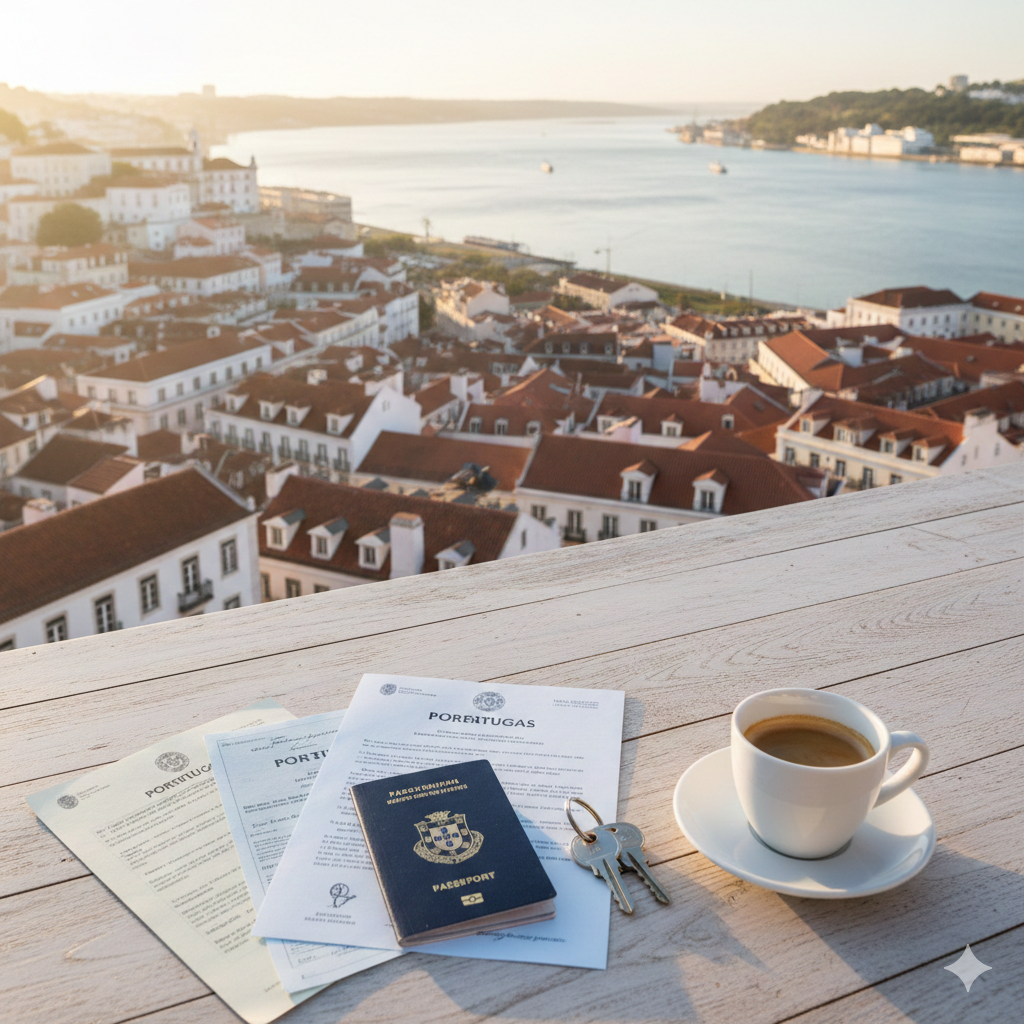
Moving to Portugal with a D7 (Passive Income) visa or a D8 (Digital Nomad / Remote Worker) visa doesn’t end when you enter the country.
The first days and weeks after arrival are crucial. Missing or delaying certain steps can lead to:
-
Tax penalties
-
Residence card delays
-
Banking or healthcare issues
This guide explains exactly what you must do after arriving in Portugal with a D7 or D8 visa, in the correct order, based on real expat experience.
🟢 First Days – First Week (Critical Steps)


1️⃣ Keep Proof of Entry to Portugal
After arriving:
-
Check for a passport entry stamp
-
If you entered via an automatic gate, keep your boarding pass
📌 Proof of entry is often required for your residence permit appointment.
2️⃣ Update Your NIF Address (⚠️ 60-Day Rule)
One of the most common and costly mistakes new arrivals make.
If your NIF was issued with a foreign address, you must update it to your Portuguese address within 60 days.
You can do this at:
-
Finanças
-
Loja do Cidadão
-
e-Balcão (online)
❗ Failure to update your NIF can result in:
-
Fines
-
IRS (tax) complications
-
Delays with your residence card
3️⃣ Activate Your Portuguese Bank Account as a Resident
Visit your bank to:
-
Update your address
-
Inform them you are now living in Portugal
📌 Some banks restrict or freeze accounts if residency is unclear.
🟡 First 2–3 Weeks: Residence & Healthcare


4️⃣ Attend Your AIMA Residence Permit Appointment
Your visa is not your residence permit.
At your AIMA appointment, you usually need:
-
Passport
-
Visa
-
Rental contract
-
NIF
-
Bank statements
This step officially starts your Portuguese residence card process.
5️⃣ Register With the Portuguese Public Healthcare System (SNS)
Go to your local Centro de Saúde to obtain a Número de Utente.
This number allows you to:
-
Access public hospitals
-
Get a family doctor
-
Use emergency services
6️⃣ Apply for NISS (Especially Important for D8)
-
Mandatory for D8 visa holders
-
Optional but useful for D7 holders
The NISS (Social Security Number) is required for:
-
Legal work registration
-
Social contributions
-
Certain tax and employment processes
🟠 First Month: Taxes & Daily Life Setup


7️⃣ Clarify Your Tax Residency Status (Very Important)
A common myth:
“If I stay less than 183 days, I don’t pay taxes.”
❌ Not always true.
In Portugal, you may become a partial tax resident if:
-
You rent a home
-
You show intent to settle
📌 Consulting a tax advisor early can prevent serious fines later.
8️⃣ Put Utility Contracts in Your Name
Try to register:
-
Electricity
-
Water
-
Internet
These documents are often used as:
-
Proof of address
-
Supporting documents for Finanças and AIMA
9️⃣ Essential Daily Life Tasks
-
Public transport card
-
Local parish registration (Junta de Freguesia)
-
Family doctor request
-
Driving license exchange (later stage)
⚠️ Common Mistakes D7 & D8 Visa Holders Make
-
Assuming the 183-day rule applies in all cases
-
Not updating the NIF address
-
Delaying the AIMA appointment
-
Leaving bank accounts inactive
✅ Quick Checklist (Save This)
✔ Keep proof of entry
✔ Update NIF address
✔ Activate bank account
✔ Attend AIMA appointment
✔ Register with SNS
✔ Apply for NISS (D8)
✔ Clarify tax residency
📌 Final Thoughts
Moving to Portugal with a D7 or D8 visa can be smooth and stress-free — if you handle the first steps correctly.
Most problems expats face are not caused by the visa itself, but by missing early administrative steps.



Leave a Reply